OPENPSD
Open-source medical hardware for breast cancer patients, deployed to New York Presbyterian Hospital.
Collaborators: Michelle Hui, Reitwiec Shandilya, Joey Castillo, Sebastian Bidegain, Carson Gundlach M.D., Dr. David M. Otterburn
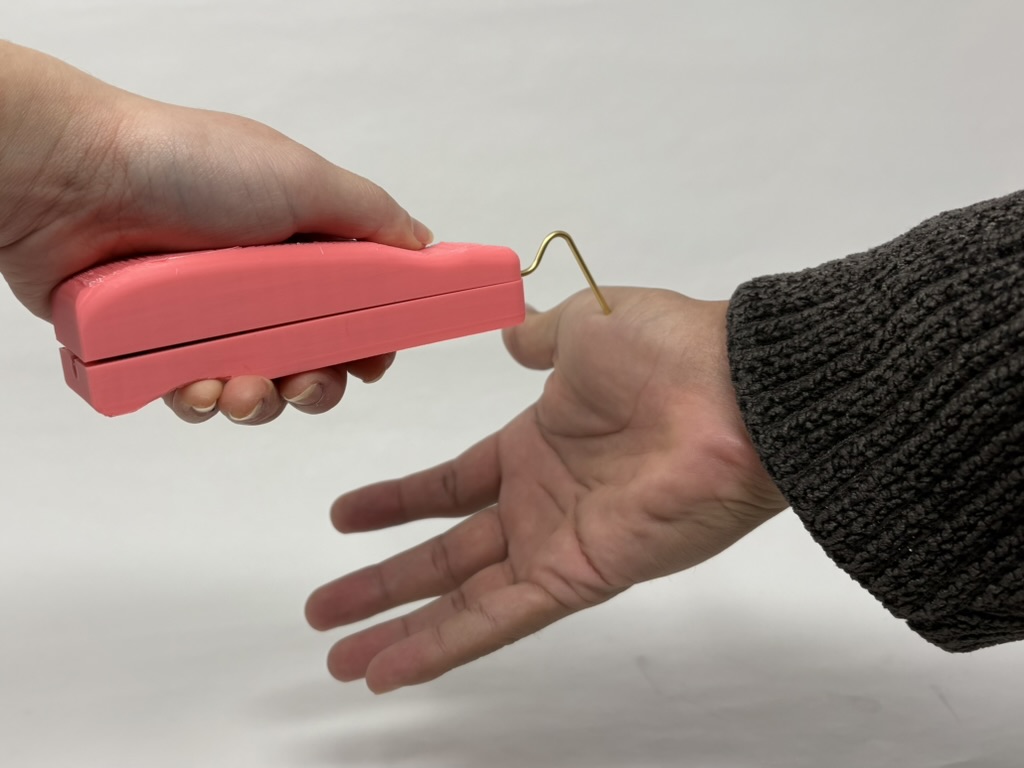
OpenPSD (Pressure Sensing Device) is a handheld, open-source instrument designed to measure tactile pressure thresholds digitally. This project supports the ongoing research of Dr. David Otterburn and Carson Gundlach at Weill Cornell Medicine, whose work in neurotization seeks to restore sensory nerve connections following breast reconstruction surgery. Through surgical co-aptation of donor and recipient nerves, Dr. Otterburn's team aims to re-establish sensory pathways; however, evaluating the success of that process has long relied on proprietary or coarse analog tools.
This open-source device captures quantitative measurements of tactile pressure (in g/mm²). By precisely logging patient response data, it allows clinicians to objectively track sensory recovery over time, providing richer, reproducible data than traditional Semmes-Weinstein monofilaments, which only measure at discrete force intervals.
Design Story
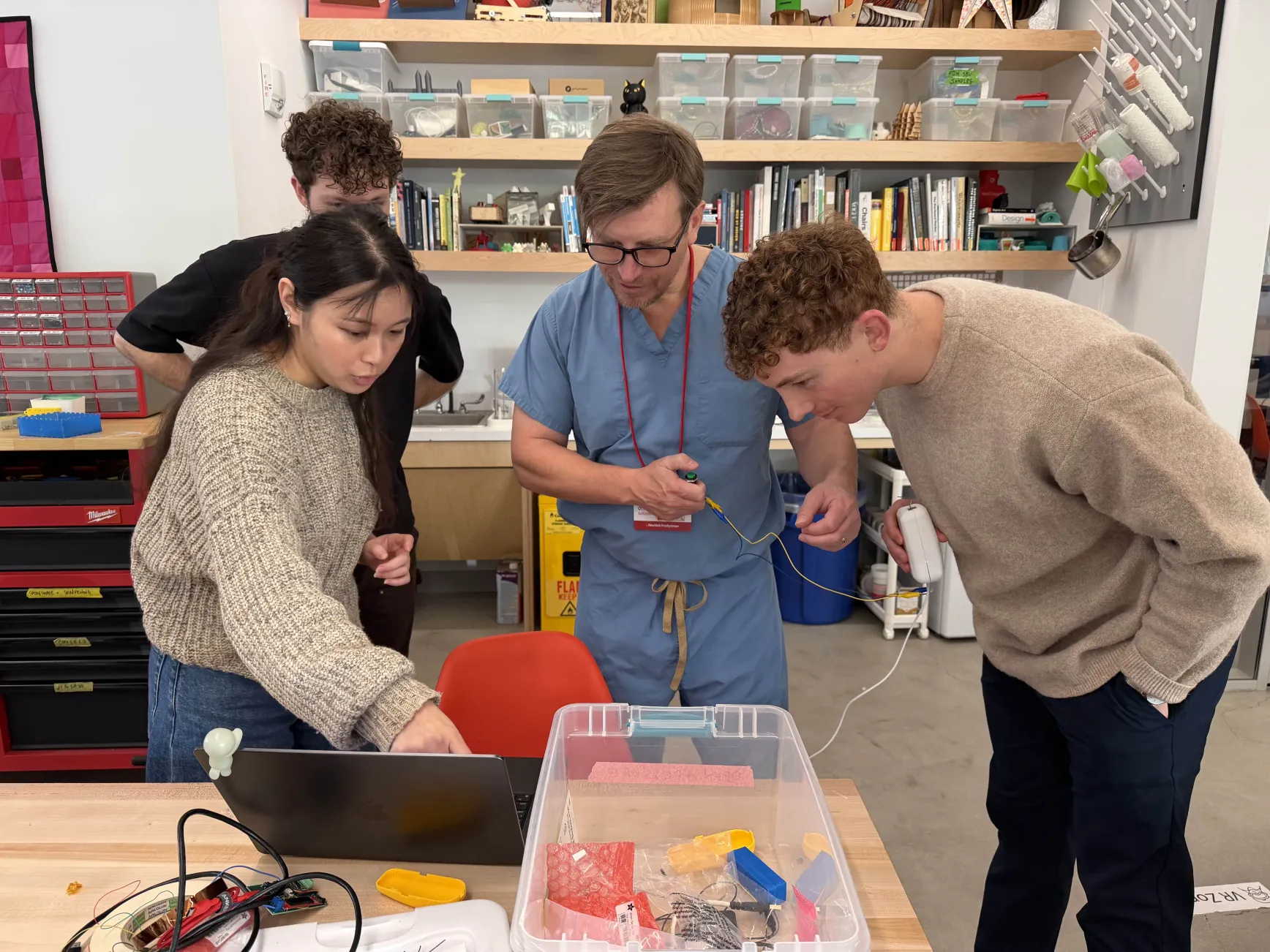
Mastectomy often results in permanent loss of sensation that significantly impacts quality of life, from the inability to feel physical contact to the development of chronic pain and a “foreign body” sensation. The Otterburn Lab has been conducting cutting-edge peripheral nerve reconstructive surgery to help patients regain quality of life, and they previously utilized a proprietary device known as the PSSD (Pressure Specified Sensory Device) to measure recovery outcomes.
However, the PSSD has been orphaned and is no longer maintained by its previous company. This project addresses that need by developing an open-source reproduction of the device — replacing its bulky, closed architecture with a clinician-centric form factor.
This device is an open-source collaboration among the Cornell Tech MakerLab, the People Aware Computing Lab, and the Weill Cornell Otterburn Lab. Its goal is to provide the Otterburn Lab and other national research facilities with a maintained, accessible tool for the accurate, standardized measurement of neurosensory testing.
System Architecture
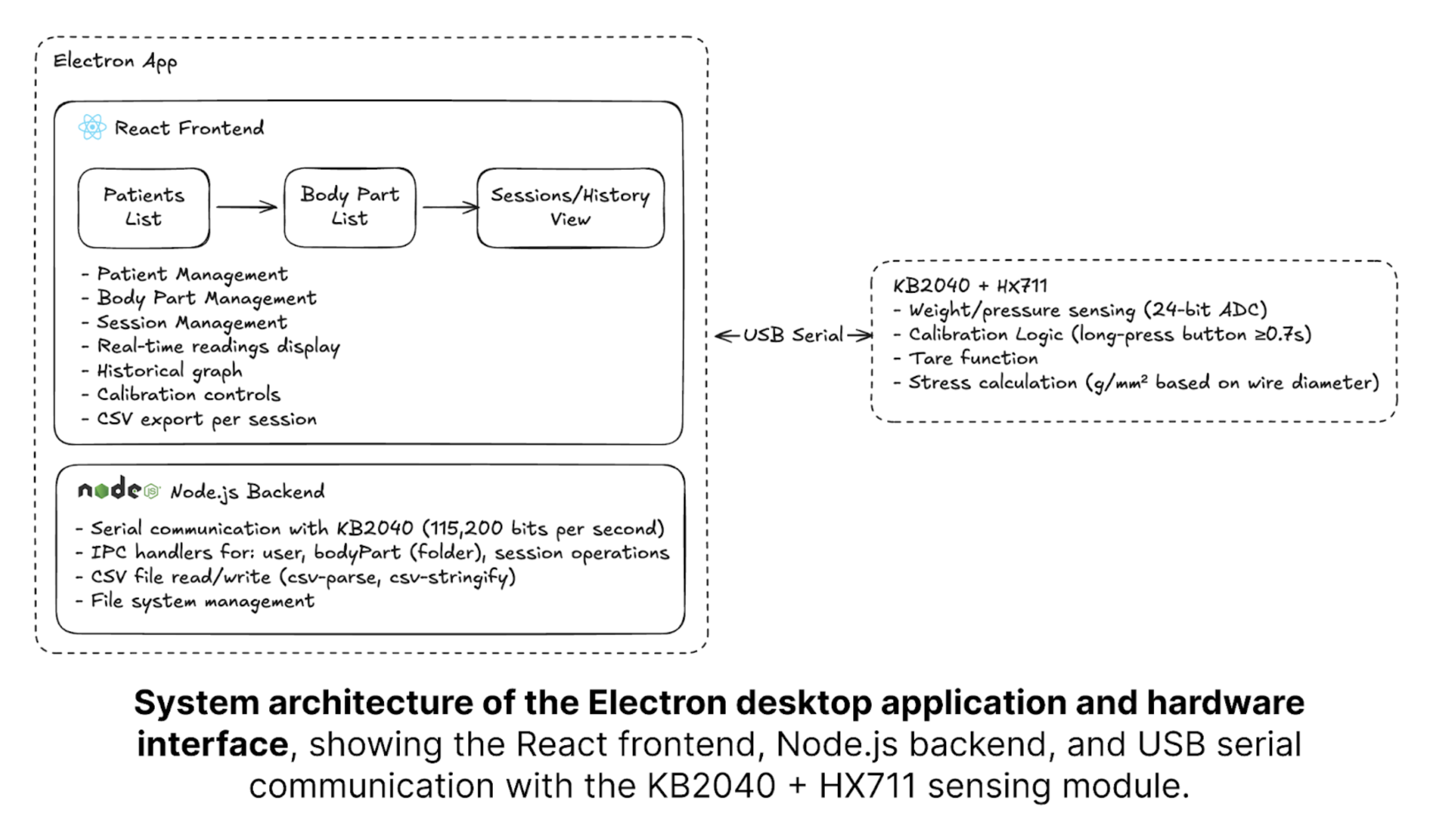
The device converts physical pressure to a digital signal to a real-time readout across four layers: a load cell and strain gauge convert applied skin pressure into a measurable force; an HX711 24-bit amplifier captures and digitizes the signal; embedded calibration and smoothing filters convert raw measurements to force readouts; and a serial graphing display delivers real-time readout and recording.
Embedded Hardware and Programming
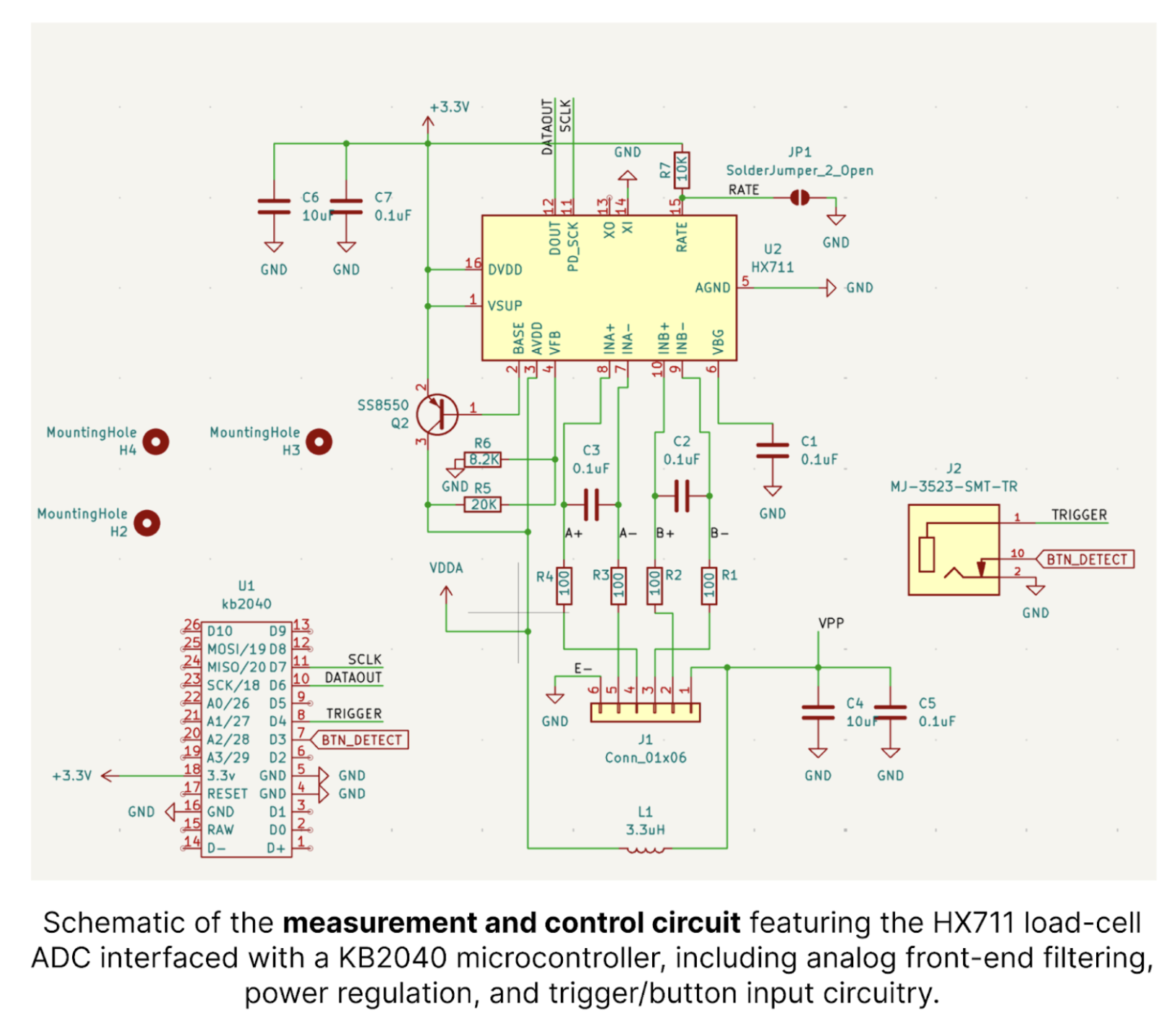
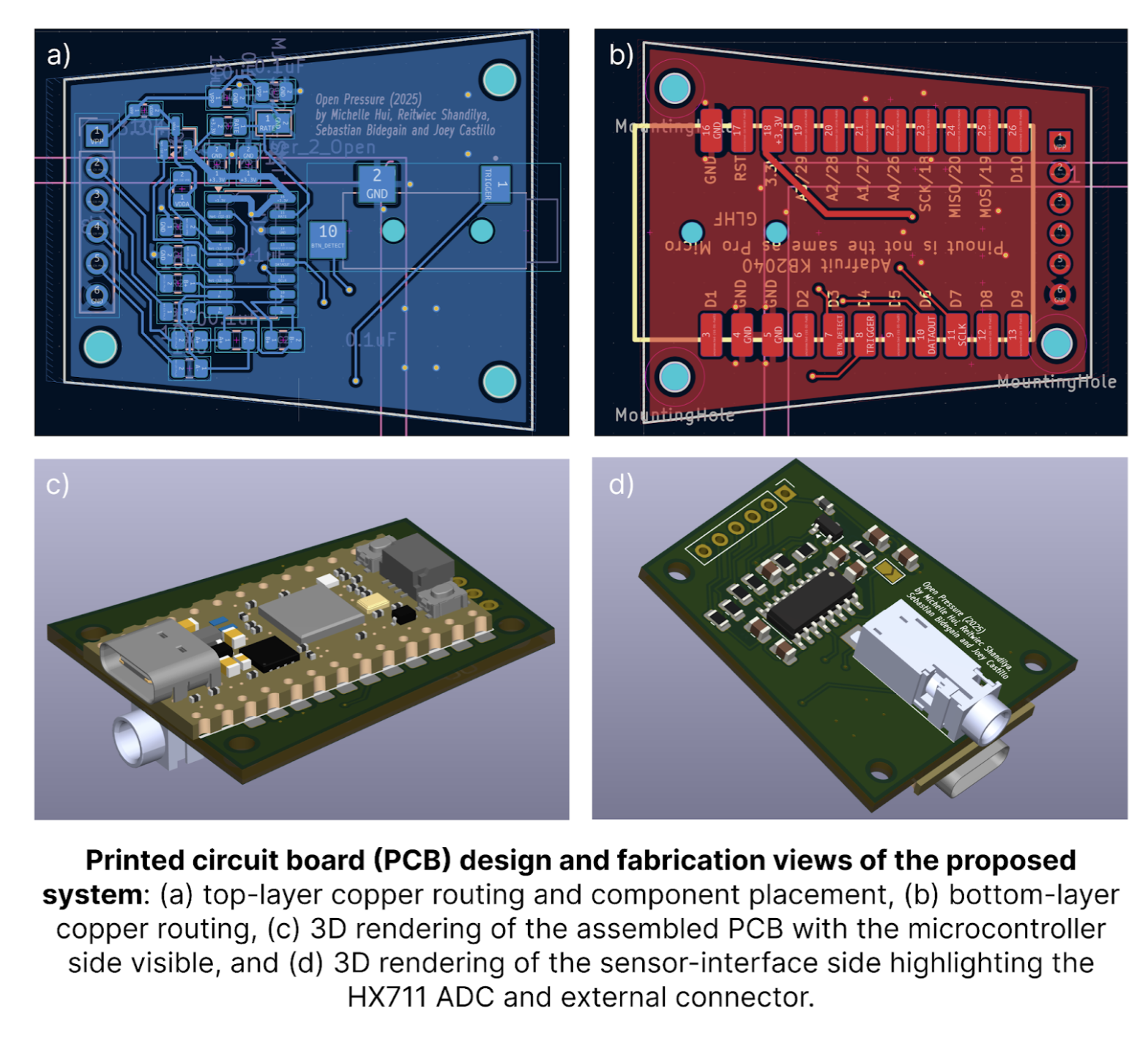
The schematic design process was guided by community accessibility instead of choosing components purely based on ideal specifications. We chose surface-mount components (SMD) as opposed to through-hole parts to keep the design compact and adaptable, while also lowering production costs at scale. Components were selected based on manufacturer datasheets to balance electrical stability with affordability, ensuring the device remains accessible for research budgets without sacrificing necessary precision.
Once PCB layout began, enclosure design moved forward alongside it as part of a tightly linked hardware and form-factor workflow. We brought the PCB into a 3D modeling environment and produced multiple enclosure prototypes using rapid 3D printing to explore space constraints, connector alignment, and how the device would actually feel in a user's hand. Rather than treating the enclosure as something added at the end, we developed the electronics and housing together through hands-on testing and iteration.
The software was designed by first defining functional requirements (e.g., data capture, visualization, export) and then non-functional requirements (simplicity, offline use, reliability). Design tradeoffs — such as choosing CSV files over a database for transparency — were made in close collaboration with researchers, ensuring the system prioritized usability, interpretability, and seamless integration into clinical workflows.
Fabrication
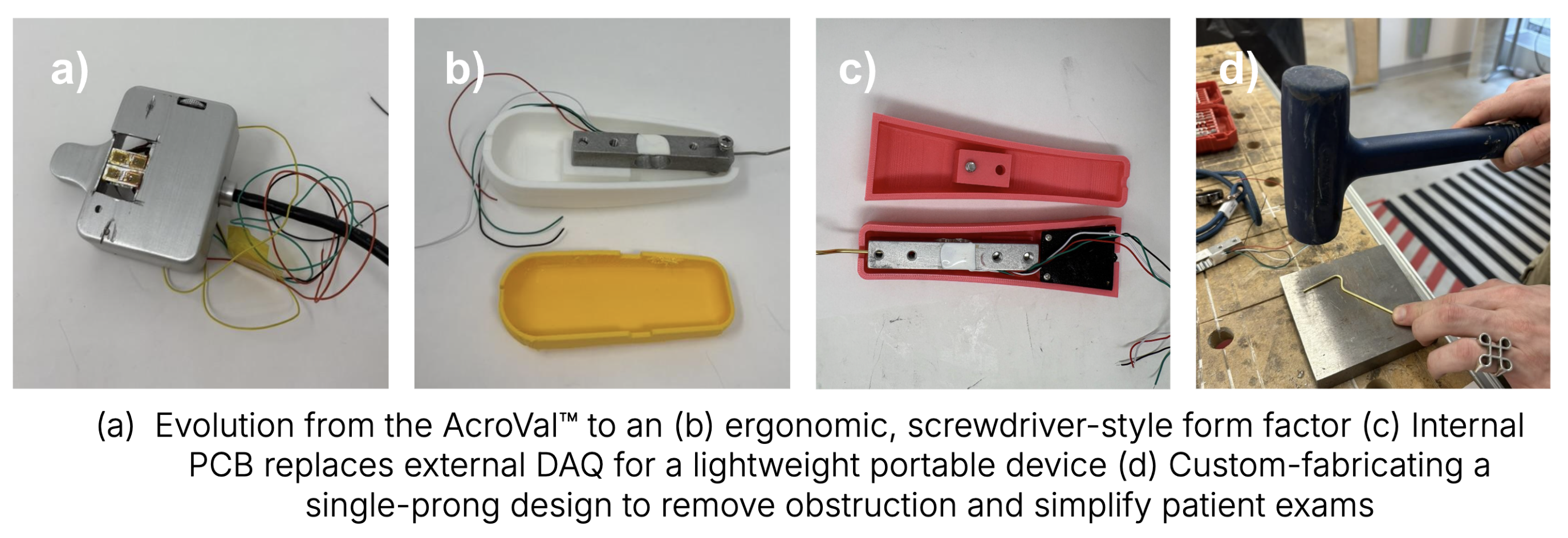
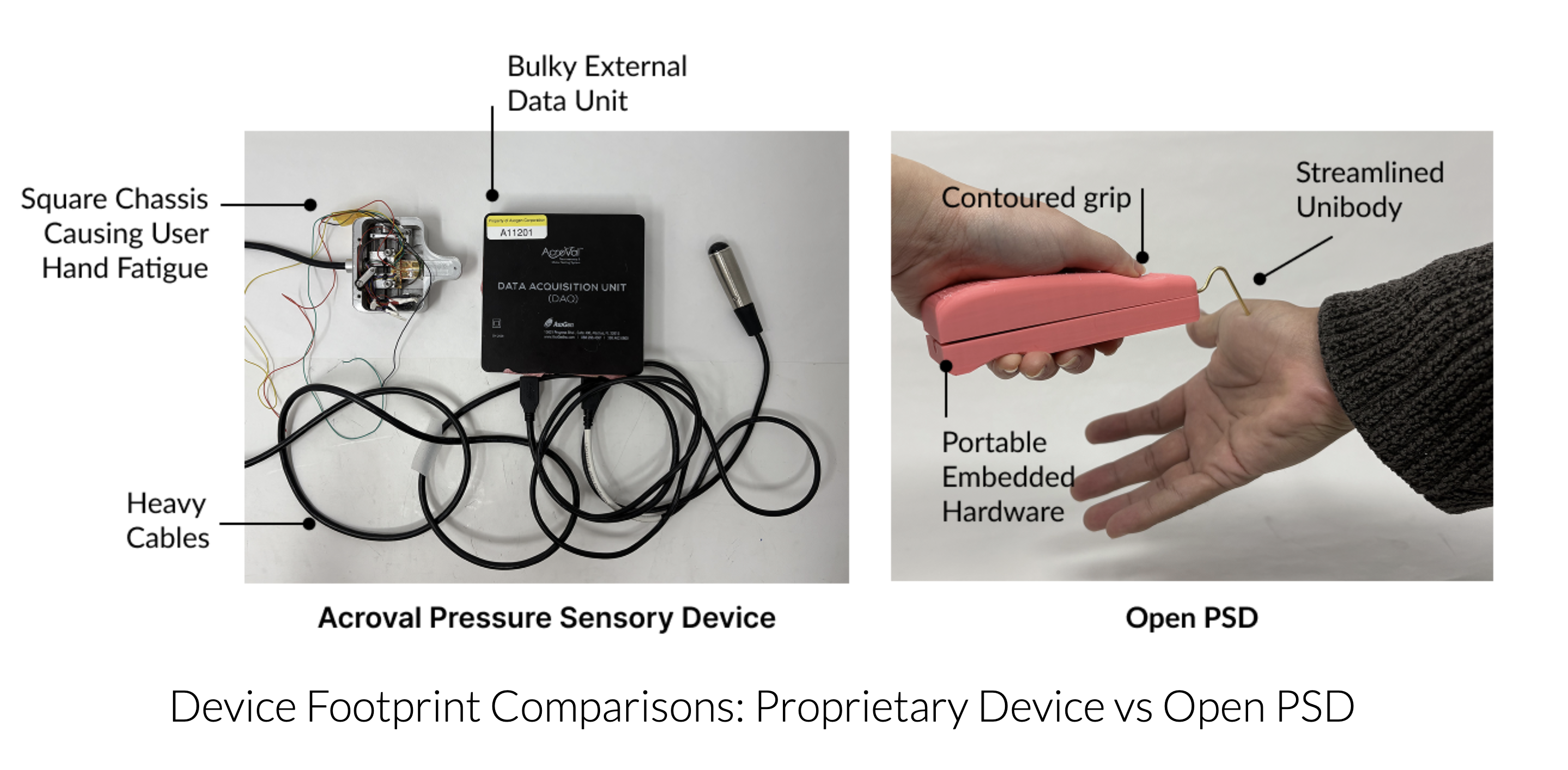
Our redesign was driven by friction points clinicians faced: a boxy, square aluminum body that was fatiguing to grip, heavy external wires that forced a clumsy two-handed juggling act during exams, and a workflow that required tedious manual data exports from a proprietary tablet. To address this, we prototyped a new form factor from the square block to a handheld screwdriver-style chassis. We miniaturized the architecture by embedding the PCB directly into the handle, eliminating the heavy external DAQ, and a direct USB-C connection to replace the tablet. This overhaul transformed a multi-unit burden into a streamlined tool for clinician usability.
Comparison and Results
We performed two phases of initial technical validation with highly promising results, confirming that open-source hardware can match the fidelity of proprietary medical tools.
- Phase 1 — Calibration against Known Weights: We fixture-mounted the load cell and strain gauge, then applied known masses to the prong. The hardware and code readings demonstrated accurate, linear tracking of the force applied.
- Phase 2 — Benchmarking against Legacy PSSD: We cross-referenced our sensor data against the original PSSD device to ensure the open-source protocol maintained data continuity for the clinicians.
While promising quantitative alignment was achieved, our most significant finding was process-oriented. Unlike the rigid development cycles of corporate medical devices, this open-source protocol enabled participatory design, allowing us to integrate a direct clinician feedback loop into the hardware continuously.
User Feedback
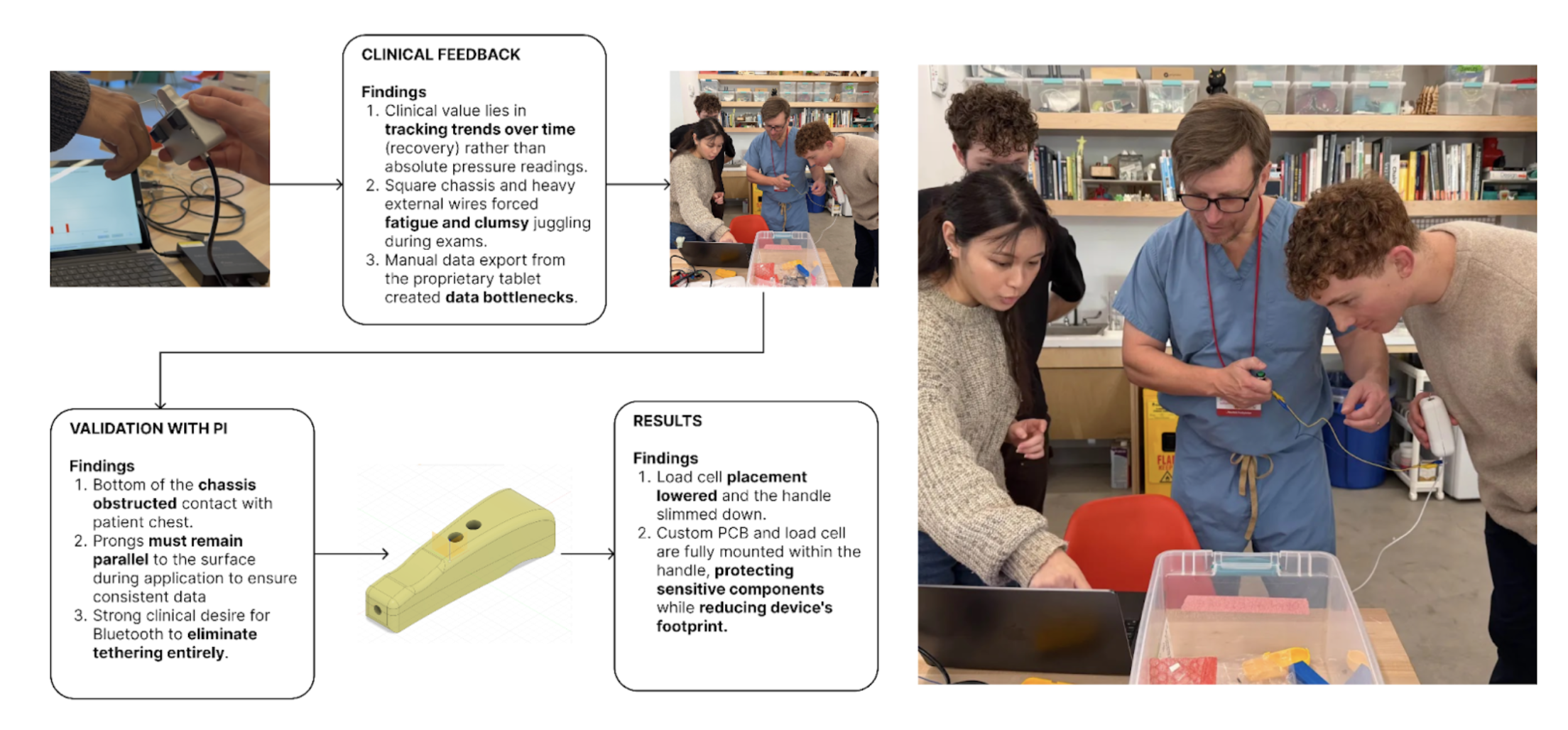
By establishing a continuous feedback loop with the Otterburn Lab, we transformed the PSSD from a theoretical redesign into a clinically viable tool. Through three rounds of rapid iteration and on-site usability testing with researchers, we successfully resolved critical ergonomic friction points and validated the accuracy of the single-prong mechanism.
- User Acceptance: Achieved positive qualitative feedback regarding the device's weight distribution, ease of handling, and data interface.
- Milestone: The validated device is scheduled for deployment into the clinical setting by the end of 2025, marking the transition from prototype to active patient assessment tool.
Beyond the PSSD
Our primary success was replacing the rigid “black box” development model of proprietary medical devices with a continuous participatory design loop. By working directly with clinicians, we eliminated commercial bloat, stripping away the legacy system's heavy external data acquisition unit, proprietary tablet, and carrying briefcase. We successfully consolidated a multi-component workstation into a single, lightweight handheld device, proving that open-source hardware can better prioritize clinical utility.
Beyond the PSSD, this project establishes a scalable framework for revitalizing “orphaned” medical hardware: devices that remain clinically needed but abandoned by legacy companies. We successfully demonstrated that proprietary, closed systems can be modernized through reverse engineering, commodity hardware, and participatory design — integrating clinician feedback early in the hardware fabrication process.